
5 Signs Your Solar Panels Need Cleaning in Connecticut
Your solar panels need cleaning when you can see dirt on them from the ground, when bird droppings or leaves are sitting on the glass, or when your monitoring app reads noticeably lower on clear days than it did in the same month a year earlier. Panel makers use the same test: REC’s cleaning guide says to clean the panels when dirt can be seen on the glass surface. Here are the five signs to watch for in Connecticut, and what each one means.
1. Can you see a film on the panels from the ground?
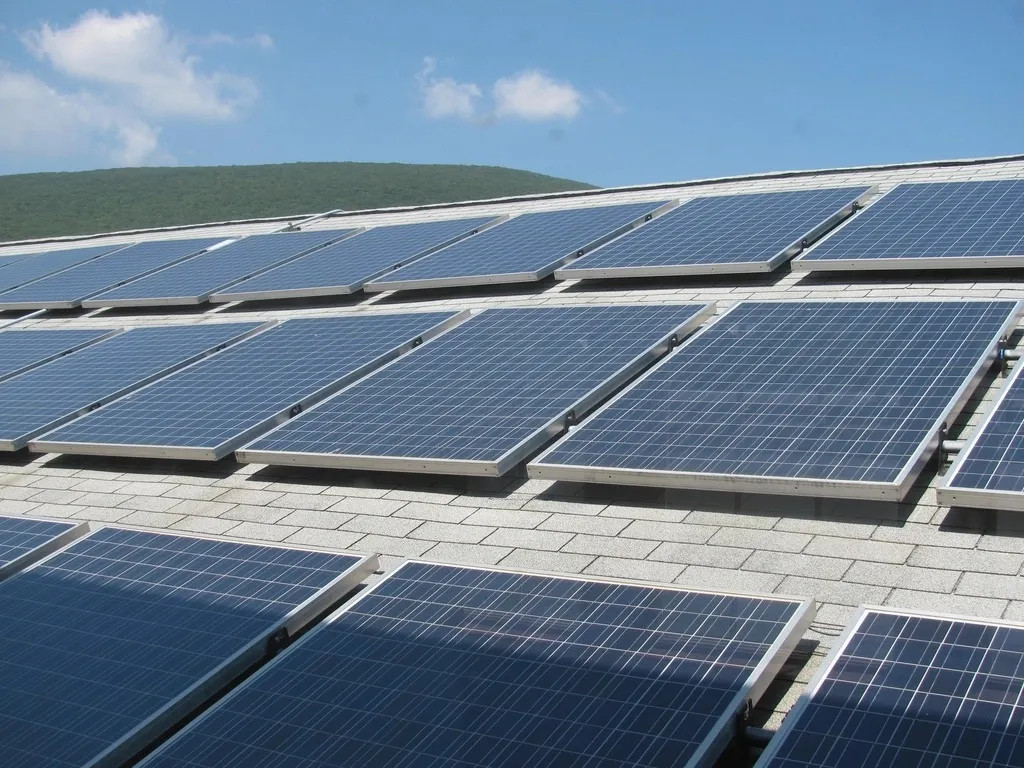
If you can see it from the driveway, it is thick enough to cost you power. Clean glass looks nearly black from the ground. A dull, grey or yellow-green cast means a layer is sitting between the sun and the cells.
In Connecticut that film changes with the calendar. Spring pollen leaves a yellow-green coat, summer adds dust and tree sap, and fall brings leaf residue. Our guide to how often to clean solar panels in Connecticut walks through each season. Homes near busy roads, like parts of North Haven and Wallingford close to I-91 and Route 5, tend to add a layer of road grime on top.
2. Are there bird droppings on the glass?
Droppings are the most stubborn kind of soiling. They sit on a small area, block the light to the cells underneath, and bake onto the glass in the sun. Rain doesn’t wash them off.
A few spots matter more than their size suggests, because of how panels are wired. Research from the National Renewable Energy Laboratory found that cutting a single cell’s light by 25% can be enough to trip the bypass diode that switches off that cell’s whole group. If droppings keep coming back in the same place, birds may be roosting on or under the array. Read about pigeons under solar panels before the spots turn into a nest.
3. Are leaves or debris stuck along the bottom edge?
Leaves, pine needles and seed pods slide down the glass and pile up against the bottom frame. Once they get wet they stay, shading the bottom row of cells and leaving a stain when they break down. In wooded towns like Hamden and Southington, this is the sign to watch for in October and November. Our fall guide to leaves on solar panels covers when to deal with them.
4. Is your monitoring app reading low on sunny days?
This is the most reliable sign, because it measures what you actually care about. Most systems come with an app or web portal that shows daily and monthly production. Two rules make the comparison fair:
- Compare the same month. A Connecticut array always makes far less in December than in July, so compare an October with the October before it, not with August.
- Compare clear days. A cloudy week lowers production for reasons that have nothing to do with dirt. Pick two bright days a year apart and write both numbers down.
If sunny-day production is clearly lower than it was a year earlier and nothing else has changed, such as new shade from a growing tree, dirty glass is the likely cause. If one panel or section reads lower than the others, mention it when you book. It may be soiling on that spot, or something a visual inspection should look at.
5. Has it been a year or more since the last cleaning?
Soiling builds up gradually, so a system that hasn’t been cleaned in a year or more is almost always carrying more than it looks like from the ground. That is especially true under heavy tree cover and near the shoreline. Most Connecticut homes do best with a cleaning in late spring and another in late fall.
What doesn’t mean your panels need cleaning?
A single cloudy day, a week of short November days, or lower winter output on its own doesn’t. Production follows the sun, and Connecticut’s sun is lower and shorter in winter. The test is always a fair comparison: same month, clear days.
What should you do next?
Don’t climb up to check. A ladder against a gutter on a damp fall morning is where do-it-yourself cleanings go wrong. Look from the ground, check the app, and if two or more of these signs show up, book a residential cleaning. We clean with deionized water and soft brushes, with no pressure. Every cleaning includes before and after photos and a free visual inspection. For what a visit typically costs, see our solar panel cleaning cost guide.
Seeing one of these signs? Call or text (203) 659-0781 and we’ll take a look.
SolarWash CT — Wallingford, Connecticut
Last reviewed:
Related Services
Related Areas
Need Your Solar Panels Cleaned?
Get a free quote from SolarWash CT — serving 26 towns across South Central Connecticut and Fairfield County.